From the Ground Up: Local Belize Communities Drive Scalable Organic Waste Solutions

Key Takeaways:
Recycle Organics' Network & Education Program has become the engine for local change: The key enabler for implementing community-wide organic waste management measures wasn't just funding or technology — it was creating a monthly peer-learning platform where municipalities shared experiences, connected with national institutions and linked up with private sector actors. This collective learning infrastructure is what turned isolated challenges into shared, actionable solutions.
Organic Waste Management (OWM) Plans are bridging local vision with holistic implementation: The four OWM Plans weren't generic templates — they were tailored to each municipality's operational reality. This allowed each city to pinpoint its own bottlenecks (transport costs, enforcement gaps, financing shortfalls, etc.) and prioritize concrete, feasible measures. Planning rooted in local context is what unlocked action on the ground.
The most effective solutions combine technical, economic and community-driven approaches: No municipality moved forward with a single lever. Orange Walk paired a public-private composting partnership with a new service fee and household bagging rules. Belmopan combined youth-led composting projects with traffic warden enforcement training. This multi-dimensional approach — technical, financial and social — is what sets this program apart and makes it replicable.
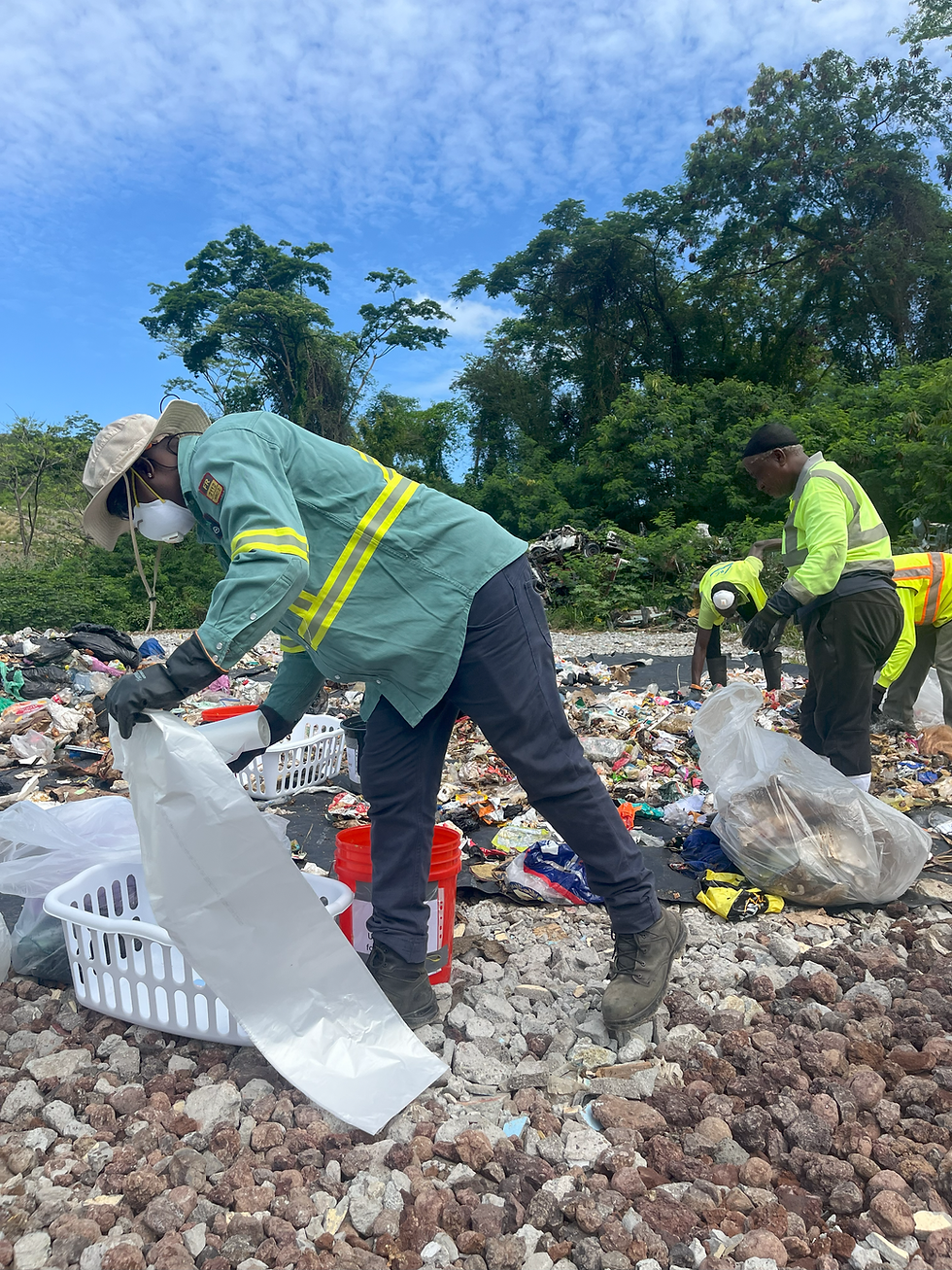
Three years ago, all nine municipalities across Belize reached a turning point: enough was enough when it came to poor waste management. Illegal dumping and burning, limited awareness regarding methane emissions from final disposal and capacity gaps had long held back progress, despite the clear opportunity to turn nearly half of the country’s waste stream into valuable resources with the right tools and knowledge to sustainably manage organic waste.
That’s what the Recycle Organics team—led by the Center for Clean Air Policy (CCAP) and ImplementaSur—uncovered during a baseline study in 2023. Today, momentum is building. Municipalities across the country are taking action—collaborating to develop community-wide waste management plans that transform a persistent challenge into a meaningful opportunity, while advancing Belize’s commitment to cut methane emissions by 30% by the end of the decade.
Over the past two years, the bulk of this capacity-building took form through RO Belize’s Network and Education Program that met monthly to discuss and create a structure for collective empowerment around crucial sustainable waste management topics like valorizing organics. Specifically, separating waste at the source creates opportunities to transform organic material into nutrient-rich compost or renewable energy (biogas) that make communities more independent, resilient and self-sufficient—while lowering emissions and reducing reliance on costly imported fertilizers and fossil fuels.
“The Belize Network [and Educational Program] provided a valuable space for exchanging ideas and learning from on-the-ground experiences among municipal staff who would otherwise be unlikely to come together. It was a great opportunity to close gaps, connect through shared experience and grow together, especially as councils are currently facing similar challenges.” - Alejandra Pedraza Luengas – Local Policy Consultant: Recycle Organics Program
The Educational Network fostered a shared learning platform where cities and towns exchanged common sector-related experiences and explored technical solutions to overcome challenges. It also directly connected local municipal leaders with national institutions (such as the Belize Tourism Board or Belize Solid Waste Management Authority) and private sector actors, such as those working in key sectors like hospitality or directly with sustainable organic waste management operations.

As a result of this process, four municipalities — Orange Walk, Benque Viejo del Carmen, Belmopan (Belize’s capitol), and Dangriga — developed Organic Waste Management (OWM) Plans tailored to their local contexts. The plans were completed in November 2025 and validated through both internal municipal processes and consultations with local communities, ensuring that the proposed actions reflected operational realities and local priorities.
Since then, municipalities have been advancing concrete measures aligned with the priorities identified in their plans. The following examples illustrate how planning is already taking shape into action on the ground.
Orange Walk: Creating Partnerships to Recover Municipal Organic Waste
During the development of its Organic Waste Management Plan, Orange Walk Town identified a key operational challenge: managing municipal green waste, particularly pruning residues generated throughout the city. This type of waste is not currently accepted at the Transfer Station or even the landfill, so the municipality needed to explore alternative solutions that would allow these materials to be recovered rather than disposed of. Through the Educational Program, municipal staff strengthened their technical understanding of organic waste valorization and identified practical pathways to address this gap.

The Town Council recently received a woodchipper through the RO Program that allows pruning residues to be processed into wood chips and used as an organic fertilizer for crops in the form of compost. Exchanges within the Network also helped connect the municipality with Belize Sugar Industries (BSI)—a company with nearly a decade of experience producing compost. After officially endorsing the OWM Plan, finance was unlocked, and Recycle Organics provided the chipper to foster collaboration between them. It has opened the door to a public–private partnership through which municipal green and brown waste can be incorporated into BSI’s composting operations, creating a circular solution that benefits both the municipality and local agriculture.
At the same time, Orange Walk is advancing important policy measures identified in its OWM Plan. Discussions within the Council led to key adjustments for the town’s waste service fee structure. A pilot fee was introduced in April 2026 (BZD $5/week/household) as a first step toward improving cost recovery for sanitation services.
“It is unsustainable for us to continue providing this service free of cost—it is only right for us to charge a residential waste fee.” - Joesie Cantun – Sanitation Councilor: Orange Walk Town Council
In parallel, the municipality is re-establishing the mandate that all household waste must be properly bagged for collection, a measure that had been widely adopted during the COVID-19 period.
Together, these three operational and policy actions reflect how the approved OWM Plan is already helping the municipality move from diagnosis to concrete improvements in waste management.
“Many of our residents do not bag their garbage—and it is hazardous for our employees as well," Cantun added.
Benque Viejo del Carmen: Developing Local Composting Solutions
For Benque Viejo del Carmen, the OWM Plan highlighted the high operational costs associated with transporting organic waste to the regional transfer station. Because organic materials represent a large portion of the municipal waste stream, transporting them long distances creates a significant financial burden for the municipality.

To address this challenge, the municipality is ramping up its local composting capacity. Through the RO Program, Benque Viejo also received a woodchipper to process brown waste, enabling the municipality to begin composting organic materials in windrows to be used in its community garden. In addition, 50 household composting units will be distributed to residents, promoting decentralized organic waste management and reducing the amount of organic material requiring municipal collection and transport.
“We want to recycle these branches and make organic compost for our community and help our local farmers. Families are asking us when this project will begin because it will help with job creation." - Edgar Cocom – Deputy Mayor: Benque Viejo Town Council
Belmopan: Engaging Youth and Strengthening Local Enforcement
In Belmopan, implementing its OWM Plan has progressed through both community-based initiatives and improvements in local regulatory capacity. Through the Youth Climate Action Fund, the municipality supported four youth-led environmental projects, including three composting initiatives and one biochar project, creating opportunities for young people to actively contribute to organic waste recovery and environmental action within the city.
“It’s not only beneficial to the community, but it encourages youth to get into conservation and be part of what we are building.” - Leon Castillo – Climate Action and Environmental Solution Manager: Belmopan City Council
At the same time, the municipality has been strengthening its institutional capacity to address waste-related challenges. In collaboration with the Department of Environment, traffic wardens have received training that will enable them to issue fines related to illegal dumping and littering within city limits. This measure will improve local enforcement regulations while also allowing collected fines to support municipal services.
Dangriga: Piloting Household Composting at the Community Level
In Dangriga, early implementation efforts have focused on building local capacity through decentralized organic waste management. The municipality is launching a household composting pilot designed to introduce composting practices at the community level and provide residents with practical tools to manage organic waste directly at home. Through Recycle Organics, the Town Council will distribute 50 composting units to participating households, accompanied by practical guidance and training on composting practices.
“We need to make sure that if people receive a composting bin, it is properly utilized.” - Martha Robinson – Sanitation Councilor: Dangriga Town Council
While each municipality faces its own operational realities, early progress across the four Organic Waste Management Plans underscores the value of peer learning, collaboration, strategic planning and targeted technical support.
As part of the Network and Education Program, municipal leaders developed strategic roadmaps and translated them into concrete actions tailored to their local contexts. From public–private partnerships and improvements in waste service financing to household composting pilots and youth-led initiatives, municipalities are initiating practical approaches to reduce organic waste disposal while generating environmental and economic co-benefits at the local level.
As the Recycle Organics Program wraps up this phase in Belize, municipalities are equipped to accelerate their Organic Waste Management Plans—driving more resilient, sustainable systems and advancing circular economies for generations to come.
Stay Connected!
There are numerous ways to stay connected with CCAP. Follow us on X (@CCAPolicy), BlueSky, Facebook & LinkedIn.
CCAP’s mission is to support every step of climate action, from ambition to implementation. A recognized world leader in climate policy and action, CCAP creates innovative, replicable climate solutions, strengthens capacities, and promotes best practices across the local, national, and international levels to accelerate the transition to a net-zero, climate resilient future. CCAP was founded in 1985 and is based in Washington, DC.